


Ukrainian e-commerce plays by its own rules. The fast pace of the market, combined with the need to automate every process, pushes companies to keep adopting new technologies ― not just to improve call quality, but to guarantee instant response times and 24/7 availability. All of this builds trust, boosts customer loyalty, and helps bring in new leads. Here’s how GRO grew from 10 orders a month to 10 orders a day with the help of Ringostat and Auspex Streamline.
The Companies: GRO and Auspex Streamline
GRO (formerly Grokholsky) is a Ukrainian retail and service center specializing in Apple devices and other popular brands. The company has been on the market for 16 years, but the real shift in how it handled phone calls and CRM began in 2021, when it started working with the CRM integrator Auspex.

We took a comprehensive approach to choosing a CRM and an integrator. We reviewed five to ten integrators and compared them. In the end, we chose Auspex because of their speed and the quality of communication at every stage. Even agreeing on invoices went remarkably fast.”
Auspex Streamline specializes in CRM implementation, sales department automation, AI agents, and more. Over 11 years on the market, the team has built partnerships with more than 15 technology providers and delivered over 1,500 projects, with a median launch time of 30 days.

Based on the client’s needs, we then choose the right CRM and implement it. That includes standard setup that doesn’t require developers. But when custom configuration is needed, we bring in a development team to extend the standard functionality for specific processes. We also always run training sessions, because without the right skills, a team can’t be expected to use new tools productively.
With GRO, the request started with standard system setup. Later on, we moved into a large-scale project to sync their CRM and ERP systems, helping the business grow and scale at a pace that felt comfortable for them.”
The Business Challenge
According to Andrii Kachalaba, small e-commerce businesses often have to hit double-digit growth rates just to stay competitive.
And it’s not just about how fast you communicate ― it’s about how fast you react. That means deep integration between the CRM and every internal system tracking product availability, so information stays current and instantly accessible. Logistics has to be tightly linked to the CRM too, so the team always knows exactly where a product is, where it needs to go, and when it’s time to scale up volume.”
Switching to Ringostat
GRO started out with just two store phones. Then came their first telephony system, which allowed for parallel calls. Even then, the company knew it was losing customers and needed to handle several simultaneous calls on one number. Later on, marketing needs grew: they wanted more phone numbers and the ability to track traffic sources.
Organizing Call Workflows
At GRO, buying tech isn’t like adding a random item to a cart and forgetting about it a minute later. When a customer is looking at a device worth tens of thousands of hryvnias, questions almost always come up. Some want to double-check specs, some are comparing several models, and some just want a specialist’s opinion before placing an order.
The company sees this clearly in practice. Even though average call duration has dropped significantly to around 1 minute 20 seconds, phone calls are still a key communication channel ― and not just for inbound requests. Sales reps also call customers themselves to confirm orders or clarify details.
But having the conversation is only part of the job. Just as important is making the experience feel continuous for the customer. If someone has already talked to the company a few times, they don’t want to re-explain which product they’re interested in or repeat what was discussed in a previous call.
That’s why GRO set up call routing through Ringostat so that customers are automatically connected to the sales rep who already handled their case. This lets the conversation pick up right where it left off, without unnecessary back-and-forth, and preserves the level of personalization the business relies on.
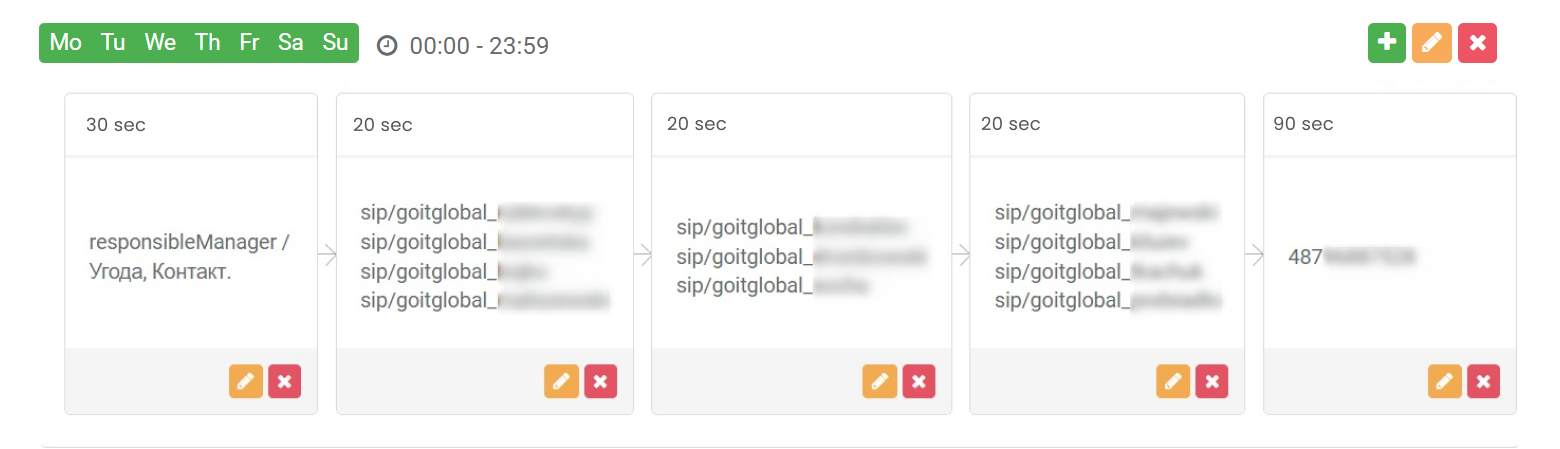
As Andrii Kachalaba explains, call queuing and routing are ultimately about trust. They help preserve a personal approach to service while making sure no inquiry goes unanswered just because a specific rep happens to be busy.
A similar challenge shows up across other communication channels. Customer behavior hasn’t been linear for a long time. A person might message on Viber today, continue the conversation on Instagram tomorrow, and then call. To them, it’s a single ongoing interaction with the company. For a business without the right processes in place, it looks like three separate stories.
That’s where omnichannel communication matters. GRO aims to bring every touchpoint together in one place, so instead of seeing scattered messages across different channels, the team sees one customer and their full history. The company built its messenger and chat integrations through its CRM, although Ringostat offers similar functionality as well.
According to Andrii Kachalaba, this approach prevents a single customer from effectively turning into several different “customers” across different channels. For sales reps, it means less lost context and a much more complete picture of every interaction.
Call Recording and AI Speech Analytics
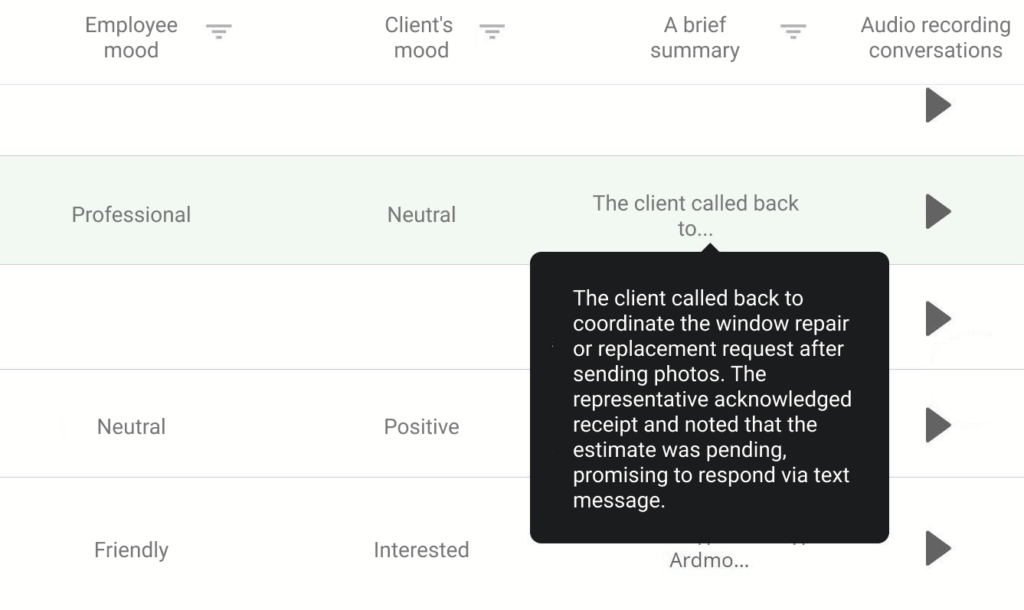
Controlling service quality with numbers alone is hard. Call recordings fill in a lot of the gaps, so reviewing them has become a regular practice for the team. Beyond the department head, GRO’s own reps use this functionality too.
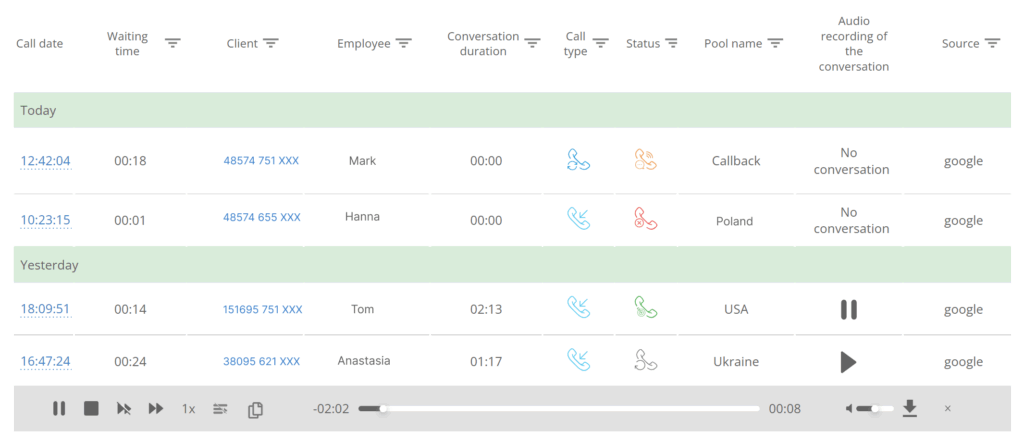
The company’s next step in this area is an AI call analyzer that will make it possible to quickly check the quality of handled inquiries and spot broader communication patterns.
At the same time, GRO isn’t planning to rely entirely on ready-made solutions like Ringostat’s AI analytics. The company is leaning toward building similar functionality locally, on its own server. That would give it more freedom to set custom analysis rules and let it integrate directly with the chat-scoring system it has already built.
As Andriy Kachalaba notes, out-of-the-box tools are still a great entry point for companies just starting out with AI-driven communication analysis. But in GRO’s case, building a custom solution that fully matches its internal approach to data makes more sense long-term.
Call Tracking and Optimization
Before implementing call tracking, GRO couldn’t pinpoint exactly which channels were driving phone inquiries. Part of the picture was visible, but understanding how individual ad campaigns contributed to sales was much harder.
The goal here wasn’t to hunt down channels to cut or defund. What mattered far more was understanding whether marketing spend was actually paying off ― and whether the numbers confirmed it.
To do that, the company uses a combined call-tracking setup from Ringostat: dynamic number insertion on the website paired with a separate static number for social media.
The team pays the most attention to Google Ads, since it drives a large share of traffic. That means it’s not enough to track site visits or completed orders ― it’s just as important to understand which campaigns actually lead to a conversation with a sales rep.
As Andrii Kachalaba explains, this analytics setup gradually gave the company a much clearer picture of how effective its marketing efforts really were, and more confidence in decisions about where to invest in advertising going forward.
The company says its ad budgets have grown a hundredfold since it started using call tracking, in step with the business’s overall growth.
Reporting and Technical Support
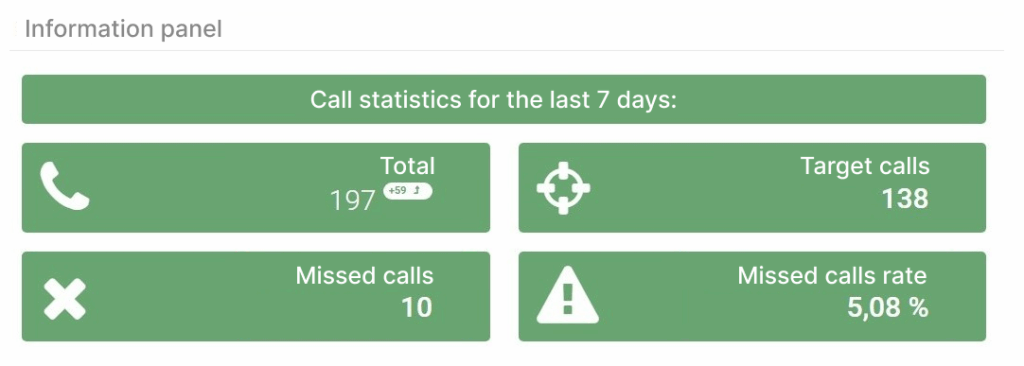
At some point, reporting stops being just a monitoring tool and starts driving decisions on its own. That’s exactly what happened at GRO: the team now runs on its own reporting system, one that gradually took shape internally and became the foundation for understanding what’s happening with calls and customers.
In the early days, though, that system was much simpler. Back then, the goal was just getting a general picture: how many inquiries were coming in, how that number changed week to week, and whether the team had enough capacity to handle them. Weekly email reports from Ringostat became the go-to reference point at that stage, giving the team a basic sense of trends without any complex analytics setup.
According to Andrii Kachalaba, combining simple external reporting early on with a later shift to internal analytics let the team gradually build a process-control and decision-making system that worked for them.
GRO also highlights the importance of Ringostat’s technical support, especially in the early stages of the partnership.
Growth Results and Evolving Business Processes
Today, GRO’s team handles a completely different volume of inquiries than it did just a few years ago. But the core challenge hasn’t changed: maintaining communication quality even as the customer base keeps growing.
That’s the exact challenge the company built its CRM, processes, and telephony system around. As a result, order volume grew from roughly 10 a month to 10 a day, and the underlying processes stayed manageable even as the load on the team kept increasing.
