


Your sales department has stabilized as a solid commercial engine — a team of five reps consistently hitting targets. You replicate the same processes and grow the headcount to 10, but instead of crushing new quotas and bigger KPIs, everything starts to fall apart.
This is a common scenario when your sales infrastructure isn’t built for scale. Most of the time, it happens because manual operations get cloned into every new hire.
Automation alone, according to McKinsey, can help companies cut costs and boost sales productivity by 30%.
In this article, we break down the mistakes that hold sales teams back from scaling — and how to actually get there, fast and efficiently.
- How to Spot the Manual Processes That Can't Handle Growth
- Mistake #1: Scaling headcount before adapting your KPIs
- Mistake #2: Keeping reps stuck in manual workflows without integrated tools
- Mistake #3: Hiring without a standardized onboarding process
- Mistake #4: Assigning the same tasks to reps with different experience levels
- Mistake #5: Managing growth without clear analytics and reporting
- Conclusion
How to Spot the Manual Processes That Can’t Handle Growth
A few diagnostic questions are all a sales manager needs to identify the bottlenecks:
- How are missed calls handled — and who’s responsible?
- Do calls automatically log in CRM, or does someone do it manually?
- Can reps see what a customer needs before the conversation even starts?
- Are call outcomes and pipeline movement being tracked consistently?
- Can you assess the quality of 100% of calls without listening to each one manually?
If any of these answers is “manually”, “not always”, or “it’s complicated”, your sales team is running on manual processes, and those processes are what’s killing your growth.
Mistake #1: Scaling headcount before adapting your KPIs
Hiring before revisiting your KPIs means payroll grows faster than revenue. New reps take time to ramp up, but your performance benchmarks and incentive structures were built for a smaller, more experienced team.
The fix: Tie KPIs to your growth plan
Break down your sales plan into specific metrics and timelines. This tells you exactly how many reps to hire, when they should hit quota, and what to track at each stage of growth.
When expanding the team, recalculate KPIs to reflect different performance levels — new hires don’t hit full productivity on day one. Split KPIs between experienced reps and those still ramping, and tie each new hire’s targets to a realistic onboarding timeline.
Practical KPI benchmarks for a scaling sales team
For new reps:
- Onboarding completion rate and number of calls/contacts in week one
- X deals closed by week two
- 70% of personal quota by the end of month one
- 100% of personal quota from month two onward
For experienced reps:
- 100% of sales quota
- X call-to-deal conversion rate
- 100% follow-up on missed calls
- Average deal size ≥ $X
- Average call duration ≥ X minutes
- Consistent adherence to the sales funnel and communication standards
For the Head of Sales, the key metric during scaling is Revenue Per Sales Rep — the average revenue generated per rep. This number will inevitably dip as new hires ramp up. Your job is to bring it back to baseline within 2–3 months of the expansion starting.
You might also find this useful: “5 Metrics Every Head of Sales Dashboard Needs.”
Mistake #2: Keeping reps stuck in manual workflows without integrated tools
Calls in one place, deals in CRM somewhere else, lead sources scattered, and customer messages spread across five different channels.
The result? Reps constantly context-switch between chats and CRM, struggle to connect conversations to the right customer, and lose both requests and communication history along the way.
Research shows that sales reps can spend up to 71% of their working time on tasks that have nothing to do with selling:
- Creating deals and contacts
- Entering data into CRM
- Looking up and dialing numbers
- Following up with customers
Let’s put that in real numbers.
Say each rep spends just 20 minutes a day on manual call logging and lead creation. That’s roughly 7 hours per month per person. For a team of 8, that’s 56 hours a month that could be spent closing deals.
Add to that the widely accepted stat that nearly 20% of calls never make it into CRM.
Here’s what that costs: average deal size is $2,000, conversion rate from call to sale is 20%. Out of 100 calls, 20 get lost before they’re logged. That’s 4 deals and $8,000 in revenue gone — with zero external cause.
The fix: Automate and integrate everything into one system
A flexible integration setup you can configure in a few clicks, without developers, specs, or waiting, is a non-negotiable foundation for scaling.
Telephony + CRM
Every lead is automatically created and logged: every inbound and outbound call, basic contact details, and even the lead source. Reps don’t waste time creating a deal — they’re already working it during the call.
And managers can analyze the pipeline without pulling anyone away from their work.
Telephony + CRM + ad platforms and analytics tools
When telephony and CRM are connected to your ad platforms and analytics, every call gets tied to its lead source and relevant context. Before a rep even says “hello,” they can see what the customer is looking for, which channel or keyword brought them in, and which pages they visited before calling.
CRM + chats and messengers
This integration lets your team switch between tools faster, receive customer notifications, manage conversations, and share files — all in one window.
Routine busywork disappears, leads stop falling through the cracks, and deals close faster, even when the team is remote or traveling.
Mistake #3: Hiring without a standardized onboarding process
Expand the team without clear training standards, a structured incentive system, sales scripts, and a defined strategy — and your senior reps will drown in approvals and manual tasks that have only multiplied. Ineffective onboarding directly translates into lost leads.
The fix: Build training around your new scale and incentive model
The data speaks clearly: sales teams with a standardized process see conversion rates 78% higher than teams without a systematic approach. And win rates increase by 15% when dynamic coaching is applied consistently.
The goal is for every new rep to perform like your best salesperson — and the way to get there is learning by example.
Ringostat’s “Hidden Mentor” feature lets you or a senior rep join live calls and guide new hires in real time, without the customer hearing a thing. You can also use call recordings to train new reps on examples of deals that were closed well.
Mistake #4: Assigning the same tasks to reps with different experience levels
When strong reps burn time on small deals and new hires take on complex clients, handling time goes up and average deal size goes down.
The fix: Segment customers and distribute responsibilities accordingly
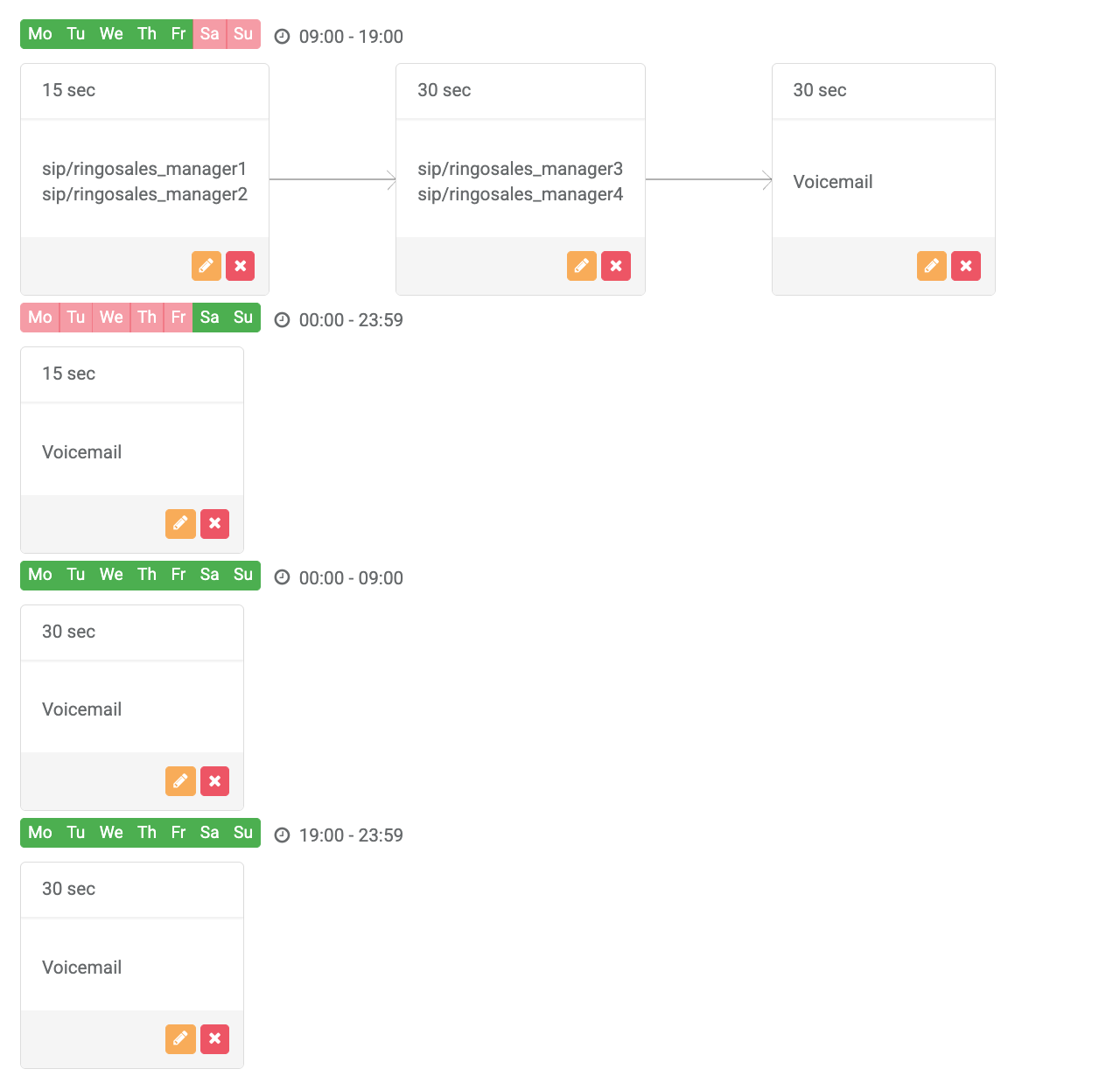
Ideally, you should be able to configure call routing so that inbound requests automatically go to the right rep, while also balancing the workload across the team.
A good example is the logistics company TVL, which regularly optimizes its call routing scheme based on the team’s current needs.
The company faced a classic industry problem: when a customer needed an immediate response, calls landed with the wrong rep or were handled manually and slowly.
To improve response times and stop losing sales, TVL integrated their telephony with CRM and added the Ringostat Smart Phone app. Now the system automatically routes customers to the right specialist and creates a callback task for any missed calls.
The result: call handling speed improved by 20%, and conversion to order grew by 15%.
Mistake #5: Managing growth without clear analytics and reporting
If your reports are scattered across multiple tools and sources, you simply cannot evaluate your team’s performance effectively — no matter how much you want to.
Successful scaling is measurable and predictable. That means you need reporting built around the metrics and filters that actually match your business processes.

Sales don’t scale when a business lacks a clear view of what is really happening in the process.
The most common problem is the lack of transparency: the head of sales doesn’t understand where leads are being lost, at which stage conversion drops, and how each manager actually performs.
Scaling always comes from a well-formed strategy supported by effective tactics. It is about analytics, control, and a managed process.
Tools like Ringostat give managers the most important thing — data.
Who handles calls faster, who closes deals more effectively, which channels bring high-quality traffic, and which simply burn the budget.
Without this transparency, the sales department operates on intuition, which inevitably leads to chaotic growth.
The fix: Management reporting in one interface, fully customizable
The most important report for a scaling sales leader is the supervisor’s report. It lets you filter calls under 60 seconds to catch potentially poor or dropped conversations — or flip it and filter for calls over 3 minutes to evaluate script quality and focus on the first contacts most likely to convert. No need to review the entire call volume to give targeted feedback.
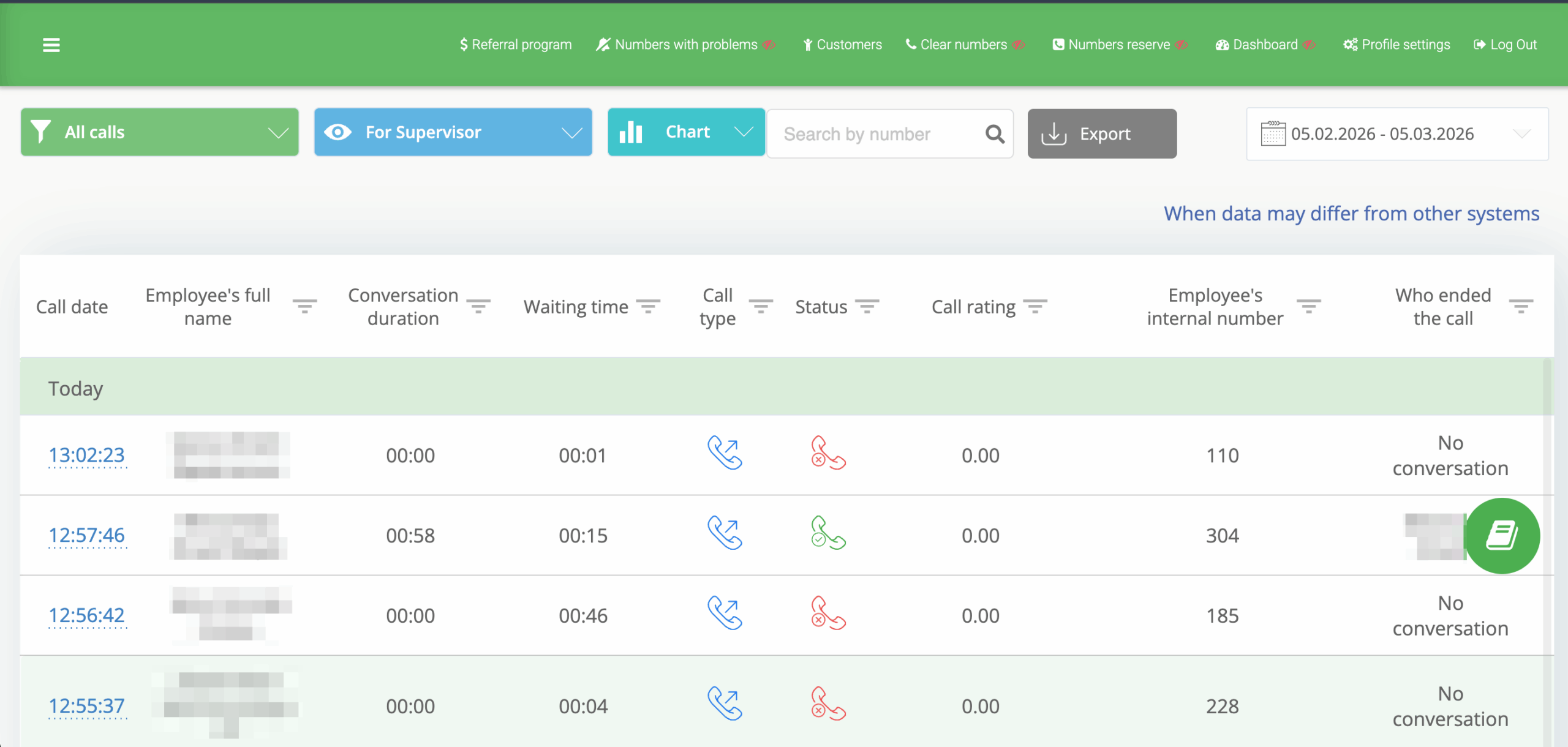
An example of a tool that provides comprehensive information about all calls within a project
Ringostat also lets you build a custom report across 30+ parameters, tailored specifically to your sales model and management needs.
For ongoing oversight, you can set up automated reports delivered to your inbox on a daily, weekly, or monthly schedule. You stay on top of key metrics without manual data collection and always have the freshest numbers when it’s time to make a call.
A few more reports are worth using as your team grows.
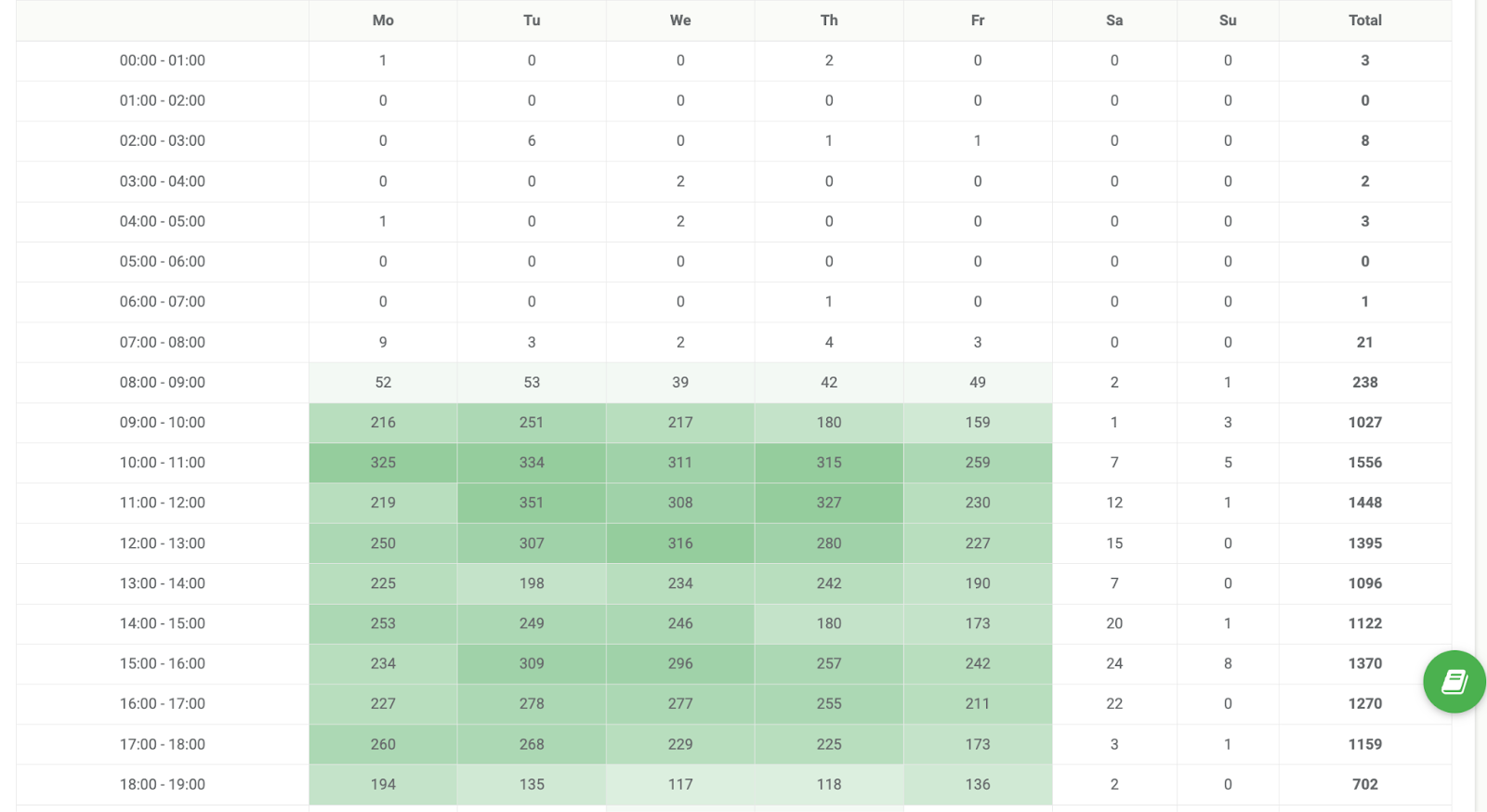
The call distribution heatmap shows call volume by hour and day of the week and helps you schedule staff more efficiently.
If you see peak load Tuesday through Friday from 10 AM to 4 PM, you plan shifts accordingly and put more reps on during those hours. That means fewer missed calls and fewer lost conversions.
And for operational discipline at scale, the unprocessed missed calls report is essential. To catch potentially lost sales as they happen, not at the end of the day when a customer has already called three competitors, set up missed call notifications.
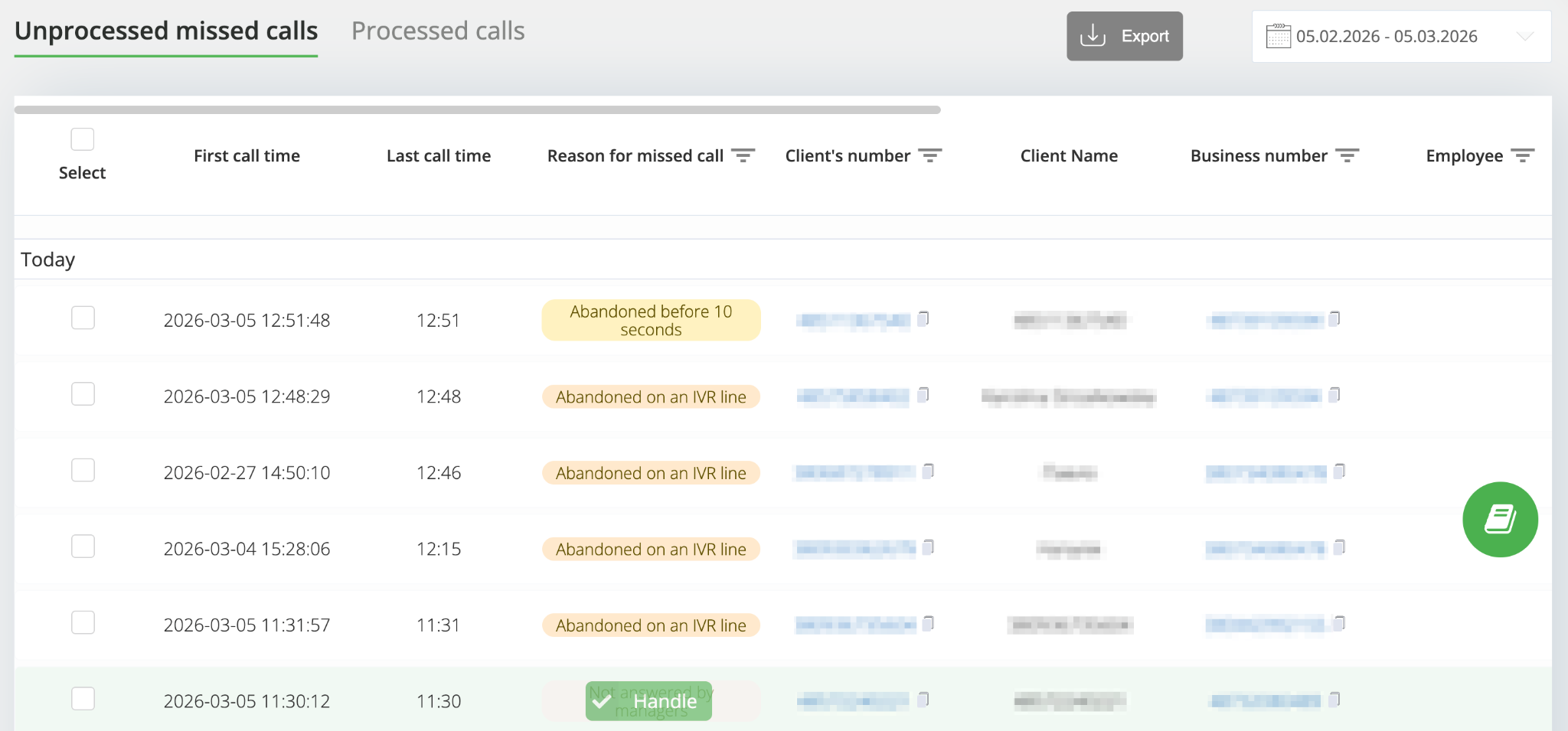
You can also log the reason a call was missed and see how many times a rep attempted to reach the customer.
Conclusion
The biggest blockers to scaling a sales team are manual operations — they create data gaps and drain reps’ time. Right alongside them: unadapted KPIs, disconnected tools, and the absence of a single source of truth for analytics.
The only way out is infrastructure that automatically captures, measures, and surfaces what’s actually happening in your customer conversations without micromanagement.
See how Ringostat can help you scale faster and smarter — book a personalized demo. Grow with confidence!
