


A customer has three ways to reach a company remotely: call, message in a chat, or submit a form on the website. The customer picks the channel — what happens next is on the business. A rep who responds instantly closes the deal. One who misses the message hands the sale to a competitor. This article looks at where companies lose customer inquiries on each channel, and how to stop it with the right tools. Examples come from Ringostat’s suite of customer communication tools.
Where Businesses Quietly Lose Customers
Some prospects disappear before a conversation even starts, and the business never finds out. The reason is simple: a CRM only shows the leads that made it into the reporting. Without the right setup, missed calls, unanswered chats, and lost web forms never get logged — so the company has no idea they existed.
RevenueHero tested this by sending a real product demo request to 1,000 B2B SaaS companies. 635 didn’t respond at all, and the rest took an average of 29 hours to reply. Speed isn’t the only issue — two out of three companies don’t respond to inquiries at all.
Calls Get Lost Between Departments
Phone leads can slip away without anyone noticing, especially when calls bounce between departments. A customer calls the main line, gets transferred to sales, and if no one picks up, gets transferred again. Not everyone has the patience to wait that long. The caller can hang up at any of these steps — and if the call never connects, it never shows up in the CRM. The business simply never learns the deal existed.
Voicemail rarely saves the day. Few customers want to leave a message and wait for a callback. Most will just dial the next number in the search results — a competitor’s.
Three things usually cause a missed call:
- the call comes in after business hours;
- it gets transferred between departments;
- voicemail fails to capture it.
Chat Replies Come Too Late
If a rep doesn’t get notified about a new website chat message, a customer can end up waiting hours instead of minutes. Few are willing to wait that long. Forrester found that 53% of customers abandon a chat if they don’t get a reply within three minutes. And customers who need a quick answer rarely switch to another channel with the same company — they go straight to a competitor.
Form Submissions Go Unanswered
Customers can fill out a website form any time — while reps are busy with other inquiries, after hours, or on weekends. That raises the odds a submission slips through unnoticed. At the same time, this format is convenient for sales: the customer already provides their name, phone number, and a description of what they need, so the rep can walk into the call prepared.
These weak points are also growth opportunities — the cost of doing nothing is real: lost customers, lost revenue, lost market share. This is exactly what inquiry-management platforms solve: they bring calls, chat, and form submissions into one place. Some go further, building out full reporting and using AI to analyze rep-customer conversations.
How to Choose the Right Solution
A few criteria matter most when evaluating an inquiry-management platform:
- Automation. Without it, calls pile up in the queue during peak hours and people hang up before anyone answers. Smart call queues, an interactive voice response system, and bots for routine tasks solve this.
- Omnichannel communication. Chats from Telegram, Viber, and email should all land in one window. Otherwise, a rep can’t realistically check every source in time, and some inquiries fall through the cracks.
- CRM integration. Without it, reps can’t see a customer’s history, and every call or chat means creating a new record by hand.
- Clear analytics. If the platform can’t produce a one-click report on response times or missed-call rates, the team is flying blind.
Tools That Help Close More Deals
Call Queue and Callback
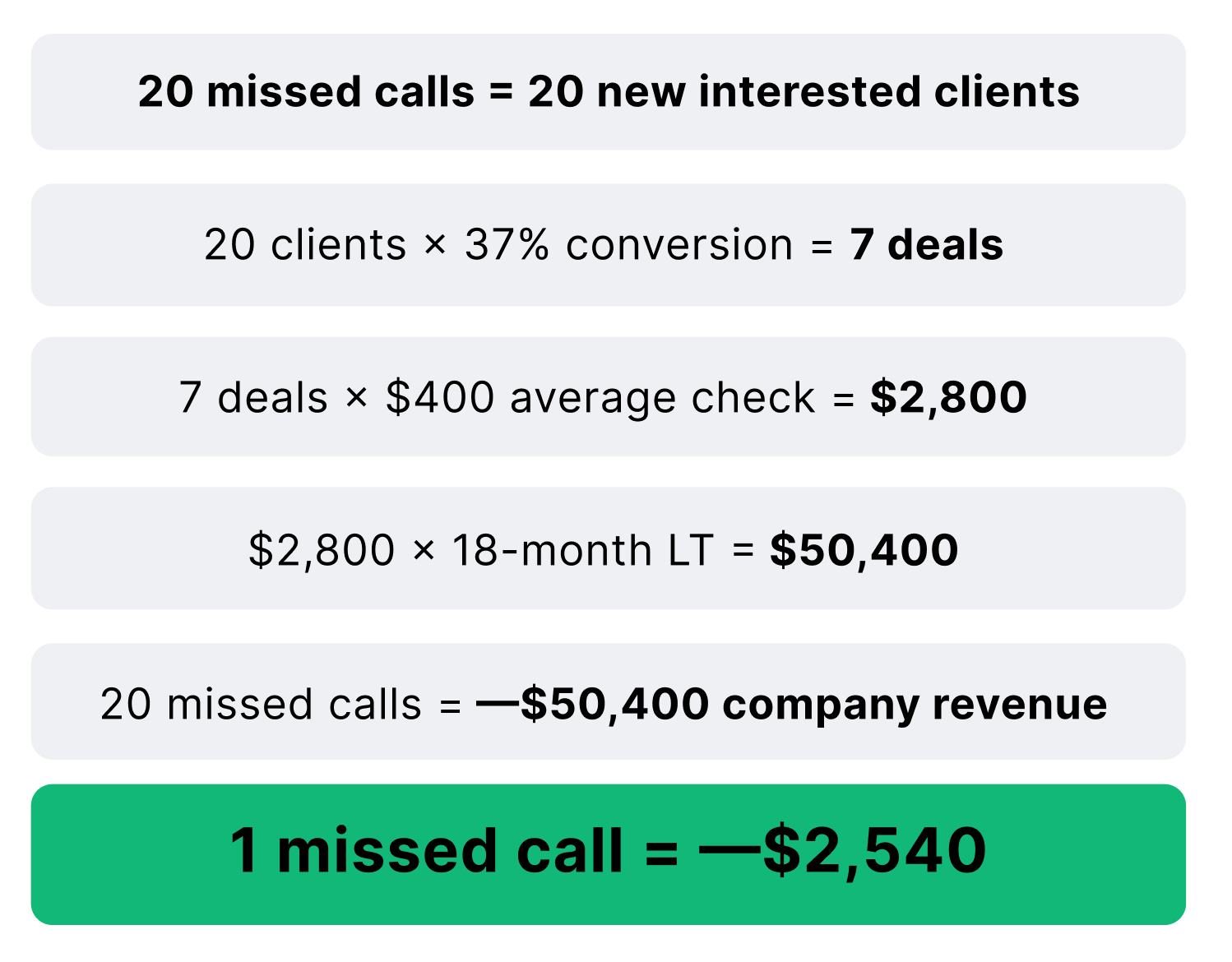
Losing customers isn’t always about an underperforming sales team. Sometimes the team is hitting its targets and still losing people — simply because more calls come in than the team can physically handle.
When there are more inbound calls than reps available to take them, some customers won’t get through in time. And when a caller hears a busy signal with no idea how long the wait will be, they’re likely to call a competitor instead.
Ringostat’s Virtual PBX solves this. It’s business telephony that answers, routes, and records customer calls no matter where the team works — in the office or remotely. It runs over the internet and stores data in the cloud, so there’s no physical hardware to install.
Call queuing and routing are the two core functions of the Virtual PBX. Here’s how it works in practice: when a customer calls and every rep is busy, the call doesn’t drop — it joins the queue. The caller hears an automated message with their position in line, an estimated wait time, and an invitation to stay on the line until a rep is free.
Queued calls can route in two ways:
- sequentially — the call rings the numbers in a chain one at a time, moving to the next if no one answers;
- simultaneously — the call rings every number in the chain at once, and whoever picks up first takes it.
For customers who don’t want to wait on hold, Ringostat offers Callback — a widget added to the company website. The customer leaves their number, it lands in the CRM instantly, and a rep sees it right away. That way the request never gets buried among other inquiries — the rep calls back as soon as they finish with the current customer, or at whatever time works for the caller.
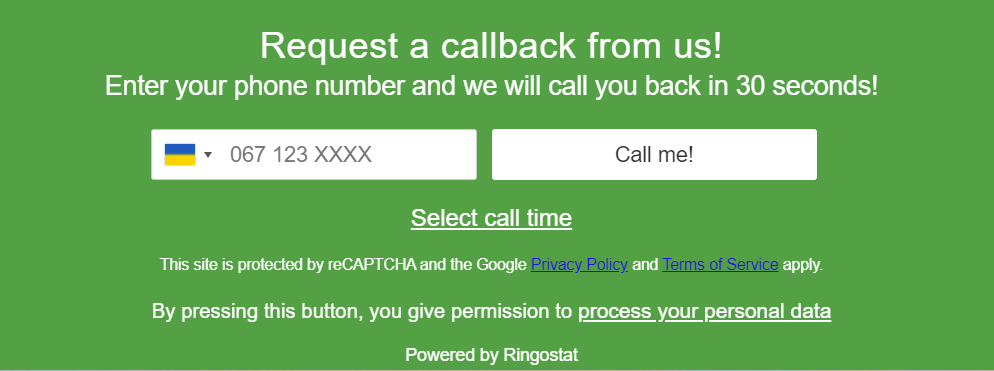
According to Ringostat data, adding a Callback widget generates up to 48% more calls from website visitors on average.
These tools have proven themselves in practice. For homebuilder Materik, a missed call could mean losing hundreds of dollars in potential revenue. To stop losing buyers and automate its sales process, the company implemented Ringostat’s Virtual PBX and Callback widget. Now no inbound call from a potential buyer gets missed. The Materik team says the Callback widget has become an essential part of their website — there will always be visitors who’d rather request a callback than dial the number themselves.
Call Recording and Quality Control
Missed inquiries are only part of the problem. Customers also change their minds mid-call — a deal can fall apart over a rep’s tone or a detail they forgot to mention.
AI-powered telephony helps cut down on weak calls. Conversation Intelligence transcribes and analyzes every call, evaluates the tone of both sides of the conversation, checks whether language standards were followed, and suggests next steps. It works across languages, so international companies don’t lose insights in any market.
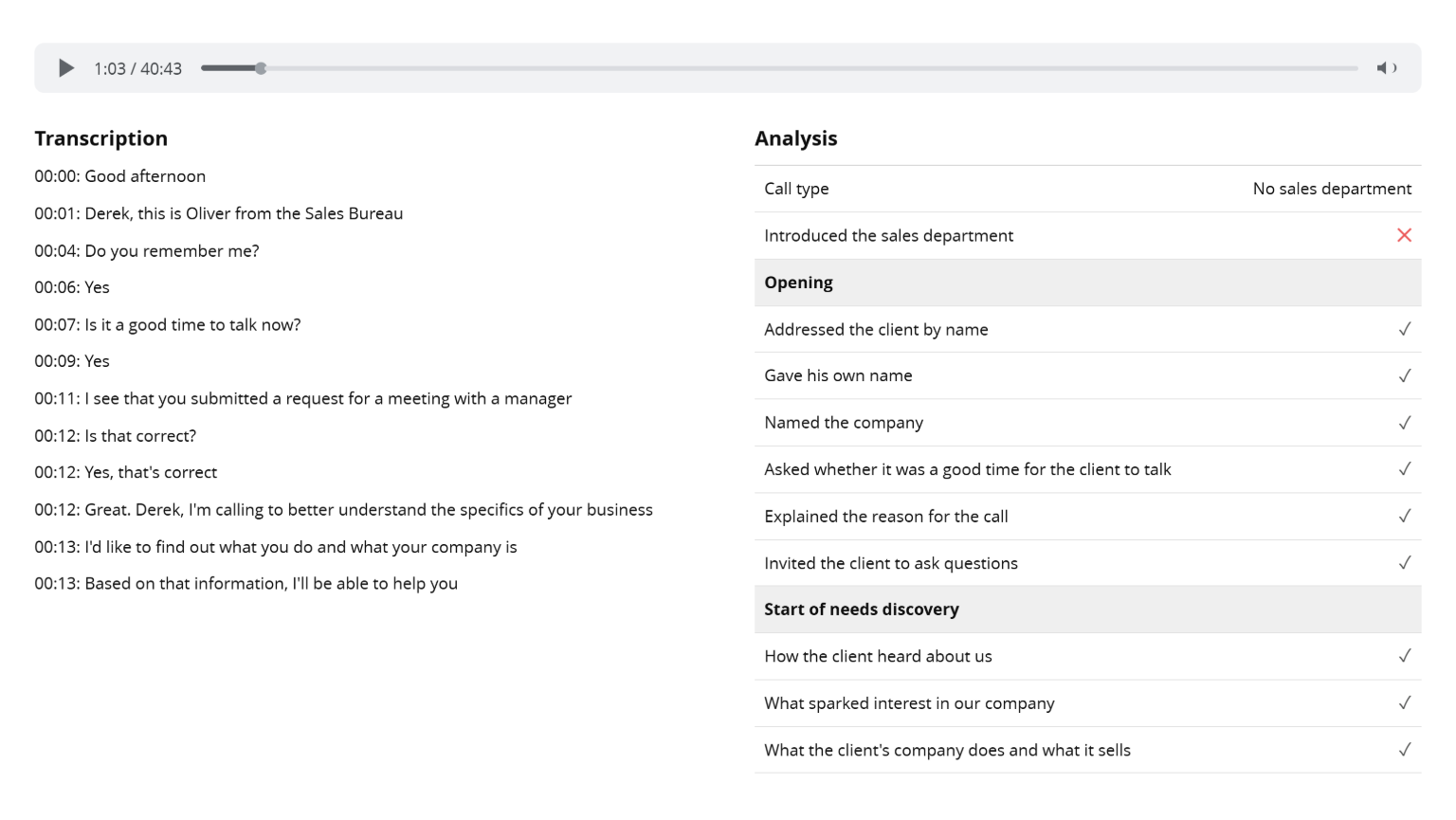
Conversation Intelligence generates a short summary once a call ends, highlighting the key moments and the gist of the conversation. It flags profanity, filler words, and whether the rep stuck to the script and covered required talking points. Teams can set up separate profiles for new hires and experienced reps, so the analysis adapts to experience level and delivers more useful results. Managers can finally see where calls are falling short without listening to every single one.
Online retailer Keramis was getting more than 300 calls a week — far more than management could physically review, even in part. After rolling out Conversation Intelligence, 100% of calls came under review without hiring a single new specialist.
Chat and Messengers in One Window
Customer messages can arrive through website chat, Viber, Telegram, or Messenger. If each channel feeds into a separate system, some messages inevitably get missed. And even when a rep checks every entry point without skipping any, that takes time away from actually talking to customers and closing deals. Multiple channels create another problem too: lost context, which can cost a company the sale.
Imagine you need an insurance policy. A friend recommends a company, you visit their website from your laptop, and you leave a message in the chat with your key questions. The rep answers two of your three questions, but you have to step away for an urgent work task. You close the site, and when you come back later from your phone, there’s no trace of the conversation — you have to start over. Since the policy matters, you patiently retype everything, this time reaching out through Messenger instead of website chat, hoping the history will stick. But every rep is busy. Ten minutes pass, then fifteen — silence. Few people would wait any longer instead of just calling a competitor.
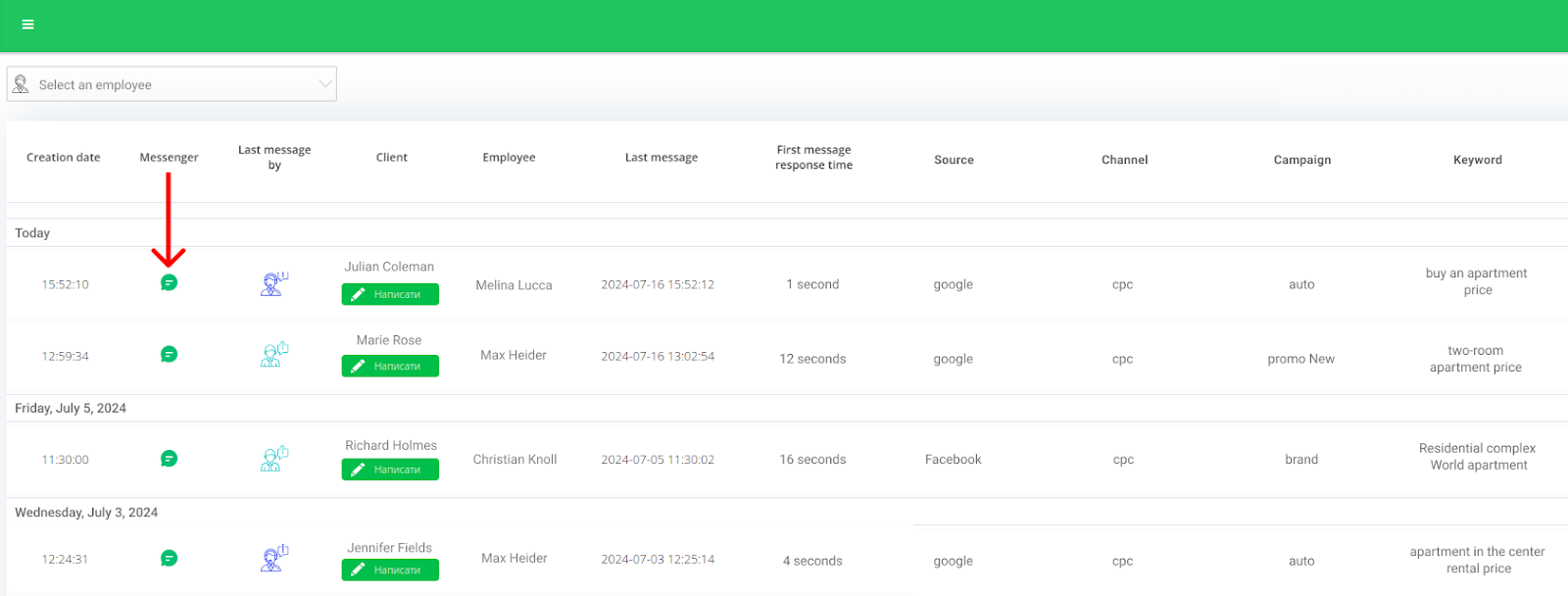
Ringostat Chat is built to prevent exactly this. It combines live chat, messengers, and a callback button in a single website widget.

Every message lands in one system connected to telephony, the CRM, and analytics, so nothing gets scattered across separate tools. A single rep can handle three to six chat conversations at once — far more than would be possible by phone or email.
If a customer closes the page and comes back later, their conversation with the company is still there. Ringostat Chat picks up right where it left off, with no need to explain the issue again.
The rep handling the inquiry sees more than just the latest message — they see the customer’s full history with the business: where the inquiry came from, which pages they visited, and any earlier messages or calls. That means a personal response, with no need to ask the customer to repeat what they’ve already said.
One App for Calls, Chats, and CRM
Ringostat Chat solves the problem of scattered text channels, but calls are still a separate stream. If telephony runs in a different app, reps have to switch windows constantly, losing focus and time along the way. Ringostat Smart Phone closes that gap. It brings calls, chat and messenger messages, and CRM data into a single workspace, with synced desktop and mobile versions.
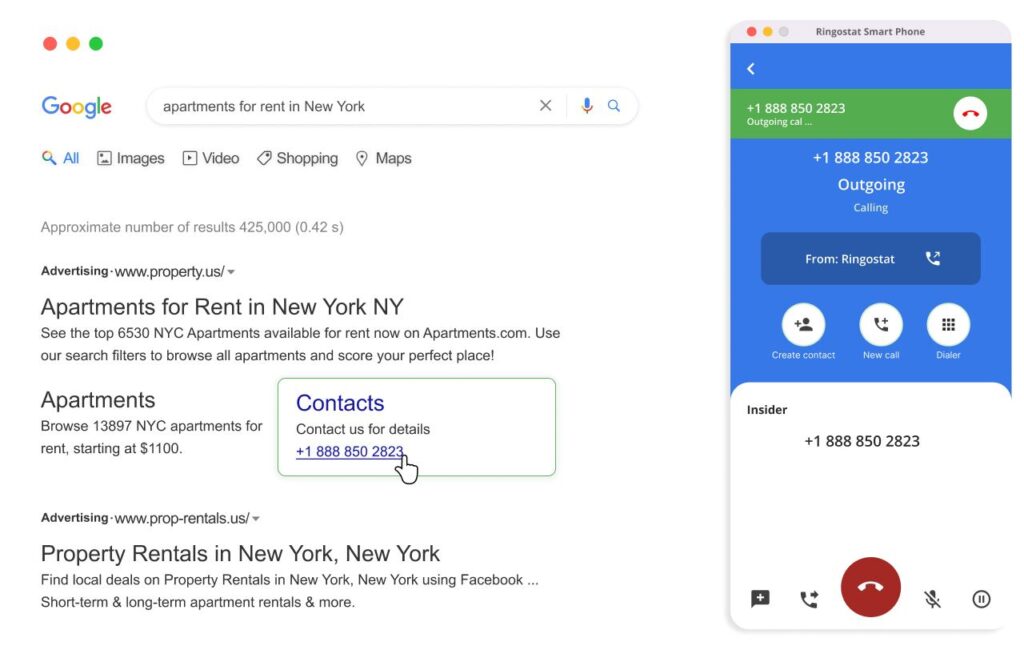
When someone reaches out for the first time, their contact can be saved to the CRM with one click, right during the call. If the customer is already in the CRM, the rep sees their name and full history the moment the call comes in. Ringostat Smart Phone pulls in that context even if earlier contact happened through a messenger or website chat rather than a call — so the rep saves time and makes a better impression by never asking the customer to repeat themselves. This comes from the app’s Insights feature.
Together, these tools produce measurable results. Bathroom retailer Gaudi DS was losing customers to scattered channels: some calls never made it into analytics, and Messenger messages sometimes went unnoticed. After implementing Ringostat’s Virtual PBX, Callback widget, and Ringostat Smart Phone with CRM integration, missed calls dropped by 40% and sales grew by 32% within two months — with no increase in budget.
Turning Tools Into a Daily Process
A well-configured call queue, chat system, analytics, and reporting won’t help if the team doesn’t know what to do with them. New tools only pay off once they’re built into a real workflow. With clear data in hand, a sales manager can put the following in place:
- a response-time standard for calls, chats, and forms, fast enough to beat competitors to the customer;
- shift schedules based on actual call volume instead of guesswork;
- a weekly review of missed inquiries across all three channels together;
- team coaching built around real conversations pulled from call transcripts.
This data needs to turn into daily tasks for the team — not sit in a report nobody opens.
Conclusion
Companies that bring calls, chat, and form submissions into one system, backed by clear response-time standards, don’t just patch the gaps in their funnel. They turn response speed into a competitive edge — while the rest of the market keeps losing customers for no reason at all.
