


Companies constantly run into the same problems: low conversion rates, slow deal cycles, and inconsistent results. These are usually seen as the main obstacles to scaling, growth, or sustaining strong performance. Each of these issues deserves attention on its own, but in practice, they’re often just symptoms of deeper — and sometimes hard-to-spot — sales problems. Let’s take a closer look.
Why the Usual Explanations for Falling Sales Don’t Tell the Whole Story
When companies run into problems like these, the go-to fixes are usually the same: expand the target audience, rewrite the sales scripts, hire more reps, or try one of a dozen similar moves. These might help, but only in the short term. The real fix usually means rethinking your approach and re-evaluating the basic criteria that directly affect falling sales, team performance, and the company’s overall success. Low conversion, for instance, isn’t exactly good news — but the real question is whether your team understands how conversion is calculated, which leads they’re bringing in, and how they qualify them. That’s where the actual problem usually lives.
What’s Actually Holding Your Sales Back
1. A Fuzzy ICP and No Clear Definition of a Qualified Lead
An Ideal Customer Profile (ICP) is a clear description of the person or company that gets the most value from your product. A qualified lead is a prospect who’s realistically likely to buy. If these two concepts aren’t clearly defined, chances are your team doesn’t know exactly who they’re selling to or what counts as a good lead. Without a clear ICP and defined MQL/SQL criteria, your funnel quickly fills up with the wrong prospects.
The root of the problem is often a lack of real customer data. In these cases, the ICP is built on assumptions rather than facts, so it goes stale fast. One way to fix this is by reviewing call recordings with customers who’ve already made a purchase. These conversations are a goldmine of insight into customer pain points, requests, and objections — information that helps you build a more complete ICP and continuously improve customer interactions.
2. Sales Depend on Individual Reps, Not a System
When a company’s results hinge on specific employees rather than solid processes, the consequences can pile up fast. Losing a top performer or overloading them can trigger a sharp drop in sales, customer churn, or declining loyalty. Uneven workload distribution can also create tension within the team and demotivate other employees who end up resenting their “star” colleagues.
The real issue starts when knowledge about customers and deal progress stays locked in individual reps’ heads. It’s no surprise that any team change immediately hits results in this kind of setup. To avoid this, it’s essential to keep all key information in a shared environment. Integrating data into a CRM — call history, customer profiles, missed calls — keeps information accessible to the whole team and frees reps from having to memorize countless details.
3. Poor Lead Qualification
It’s hard to overstate how much proper lead filtering and qualification matter. What looks like a simple task actually involves several critical steps that directly affect the performance of the sales team — and the company as a whole.
Pay close attention to whether lead statuses and the criteria for assigning them are clearly defined. It’s equally important that reps know how to gauge lead quality during a conversation and can correctly identify why deals are lost. If even one of these pieces is missing, the team’s focus drifts, and reps waste time on prospects who never intended to buy.
In practice, this often also means the company has no transparent way to check how qualification actually happens. A detailed review of customer interactions helps here — listening to call recordings, breaking down their content and structure, and so on. Handing this routine work over to AI frees up time for higher-priority, strategic tasks.
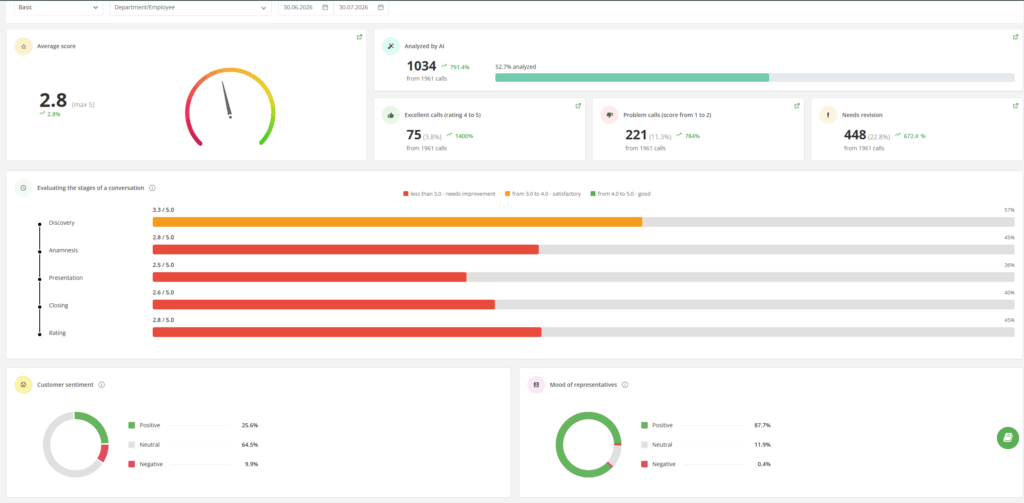
Reviewing the score for each stage of a conversation, for example, makes it easy to spot the weakest link and see an objective picture of how the sales team is performing.
4. No Real Analytics and a Marketing-Sales Disconnect
Even companies that use a CRM can’t always rely on that data for decision-making, since limited or incomplete data doesn’t reflect the real picture. This happens for a few reasons: without automation, data entry is slow and inconvenient, so reps fill in fields carelessly; manual entry leads to errors; and without clear lead criteria, a lot of “noise” ends up in the analytics.
There’s a related problem too: the disconnect between marketing and sales. Leads get handed to the sales team without context, reps don’t understand customer needs, and marketing never gets meaningful feedback. As a result, even with an SLA in place — clear rules for handling leads and response times — information gets lost or never recorded at all, and neither team has a shared view of exactly where deals are falling through.
In situations like this, having a CRM isn’t what matters — the quality and completeness of the data feeding into it does.
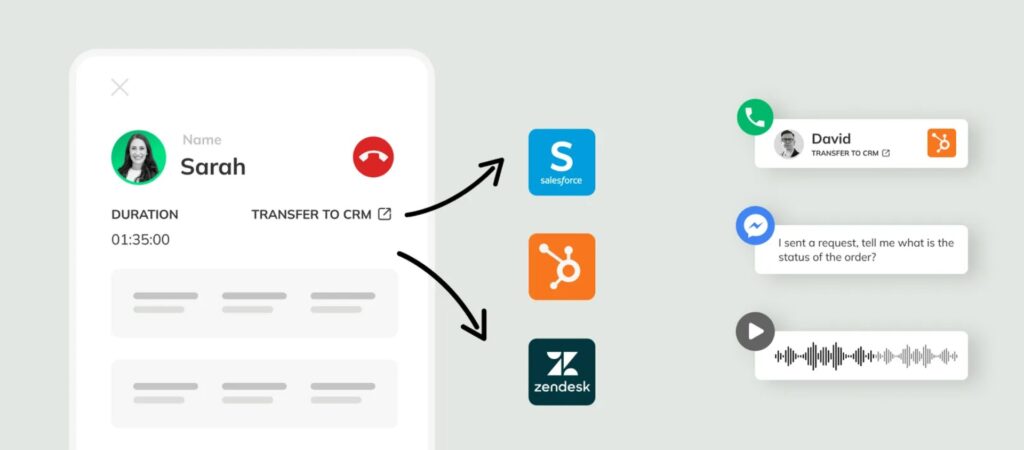
When data collection is automated and every customer interaction is logged in one system without extra effort from reps, the sales team gets the full picture: where the customer came from, what they need, and what matters to them. This makes it possible to objectively assess lead-handling quality, analyze the funnel, spot its strengths and weaknesses, and keep both teams closely aligned.
5. Customers Don’t See the Product’s Value
This problem tends to show up when reps build their pitch around a list of features instead of business outcomes. To the customer, that sounds like generic, technical jargon with no clear link to their actual needs. An effective approach requires a clear value proposition, backed by real results and case studies.
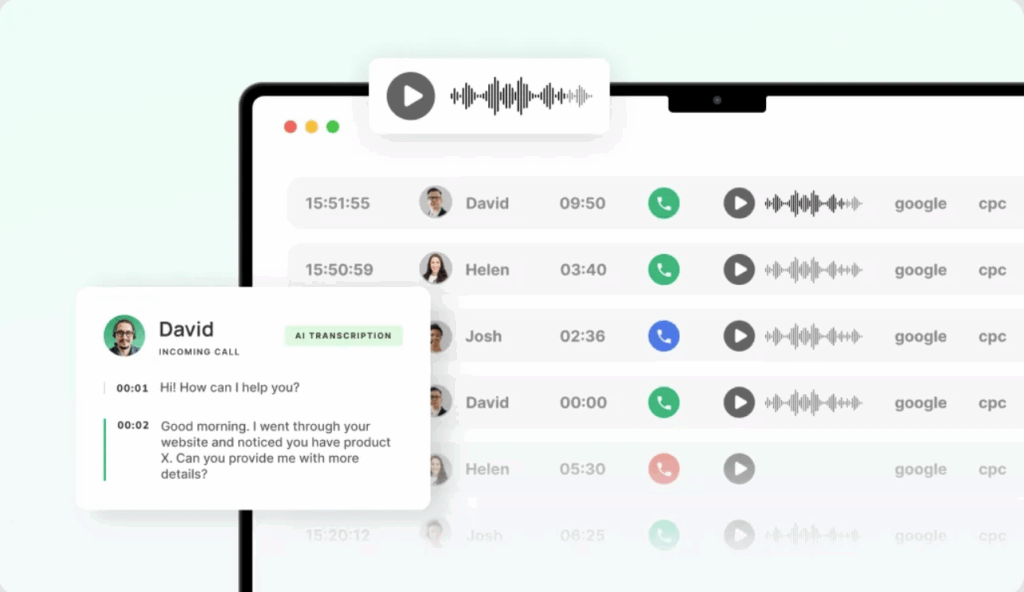
To find out exactly where value gets lost in these conversations, it’s worth analyzing real interactions between reps and customers. Call transcripts show exactly how the product gets pitched, where the focus shifts from outcomes to features, and how that lands with the customer. This data can help pinpoint weak spots in your pitch, build stronger scripts, and keep refining them over time.
Does Your Company Have Hidden Sales Problems? A Checklist
Keep in mind that hidden problems can vary depending on your niche and the external factors affecting your business right now. Still, if any of the scenarios above sound familiar, use this checklist to find out for sure.
Ask yourself three simple questions:
- Do you have a clearly documented ICP that reps can reference at any time?
- Do reps share a common understanding of lead qualification criteria and know how to assess lead quality?
- Does your sales performance depend on just one or two people on the team?
If the answer to the first two questions is “no” and the answer to the third is “yes,” you’re almost certainly dealing with hidden problems that need addressing right away. Start with the five areas covered above, since they’re all closely connected through cause and effect. Here’s how that plays out with the ICP issue, for example:
Weak ICP → poor-quality leads → low conversion → falling sales → pressure on the sales team.
Don’t stop there, though. If digging into these hidden issues surfaces other things worth fixing, add them to your backlog and prioritize based on complexity and urgency. Sometimes fixing even one core issue is enough to quickly improve sales performance and free your team up to focus on strategic growth initiatives.
Where to Start Fixing Sales Mistakes and Growing Faster
There are a few different tracks you can take here:
- quick wins that can show results within 1–2 weeks
- systemic changes that take up to three months or more
- long-term changes that drive real scaling
Quick wins include auditing your funnel to spot weak points and defining unified lead qualification criteria. Systemic changes include documenting your ICP, improving the sales process by analyzing successful deal calls, and training your team. Long-term changes include automating processes and building — and continuously using — advanced analytics. Build your own step-by-step plan to work through hidden problems, and any others you uncover, one at a time.
Key Takeaways
Hidden sales problems you might not even be aware of can quietly stall your company’s growth. To spot them, check whether your sales team has a solid, clearly documented ICP, understands lead qualification criteria, and relies on a system rather than individual reps. Don’t rush to patch things up in the first few hours or days. Run a proper diagnosis that accounts for cause-and-effect relationships, build a step-by-step plan covering quick wins, systemic changes, and long-term shifts, and follow through — helping your company grow right alongside your sales.
